Case studies

Product work across regulated growth, platform modernization, enterprise automation, and AI workflow design.

The strongest stories are organized as featured deep dives. The supporting proof tiles show additional product decisions, tradeoffs, and measurable outcomes across my experience.

Supporting proof

Additional examples by product skill.

Costco
Growth / B2B2C

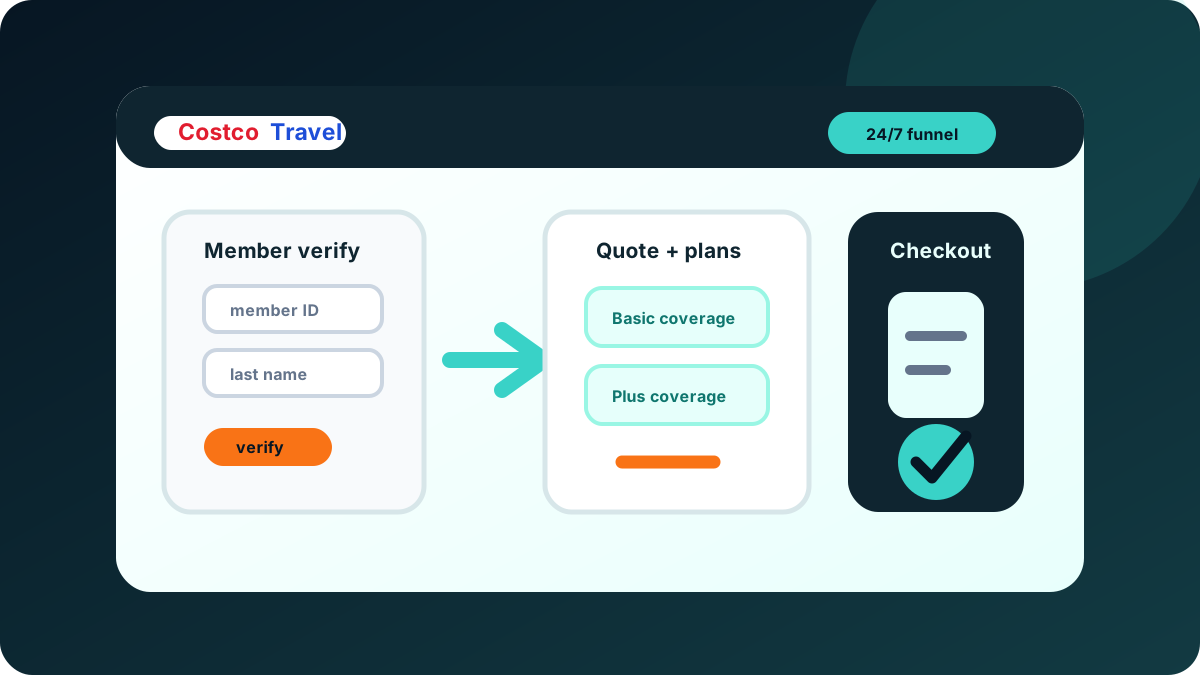
Costco white-label sales funnel

Call-center workflow to 24/7 digital purchase.

Open story
Verify
Partner compliance

Costco member verification

Reduce verification friction without breaking rules.

Open story
Pay
Mobile checkout

Apple Pay conversion lift

One-tap payment to reduce mobile checkout friction.

Open story
Trust
Privacy / compliance

Canada cookie consent launch

Compliance-first banner without conversion loss.

Open story
Adobe
Platform migration

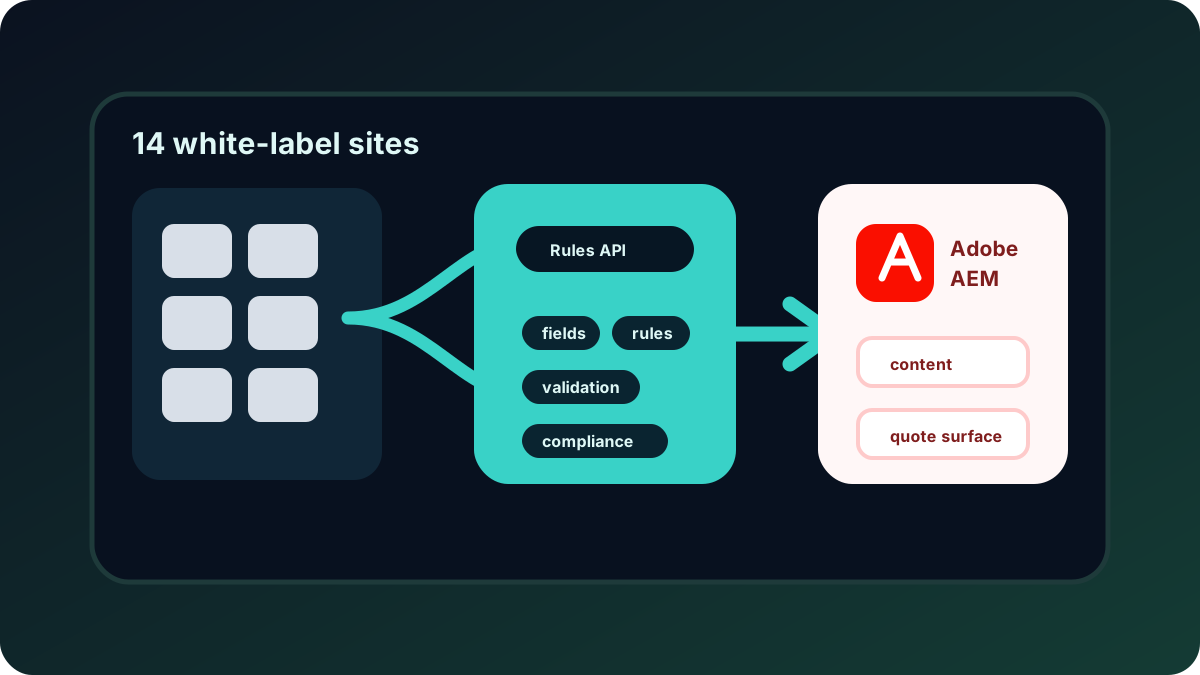
Drupal to Adobe migration

API-driven product rules for direct and partner sites.

Open story
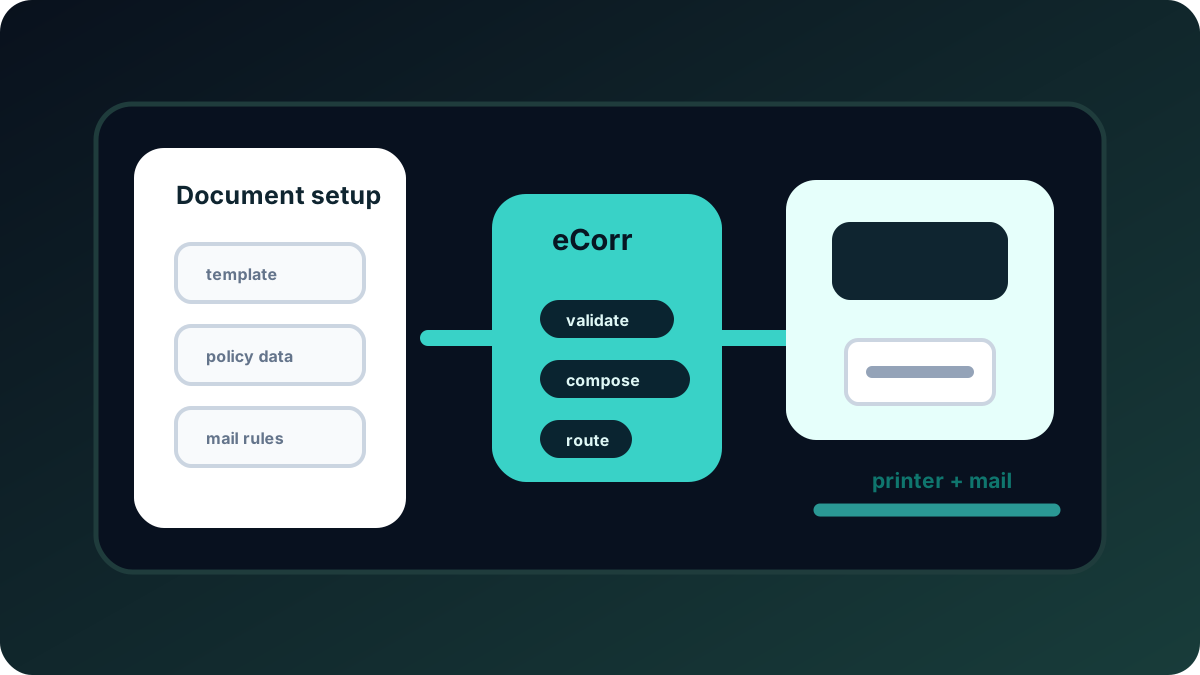
eCorr enterprise output management visual
Enterprise automation

eCorr output management

Policy document generation for thousands of users.

Open story
Print
Cost optimization

Double-sided print strategy

Data-driven cost reduction across policy documents.

Open story
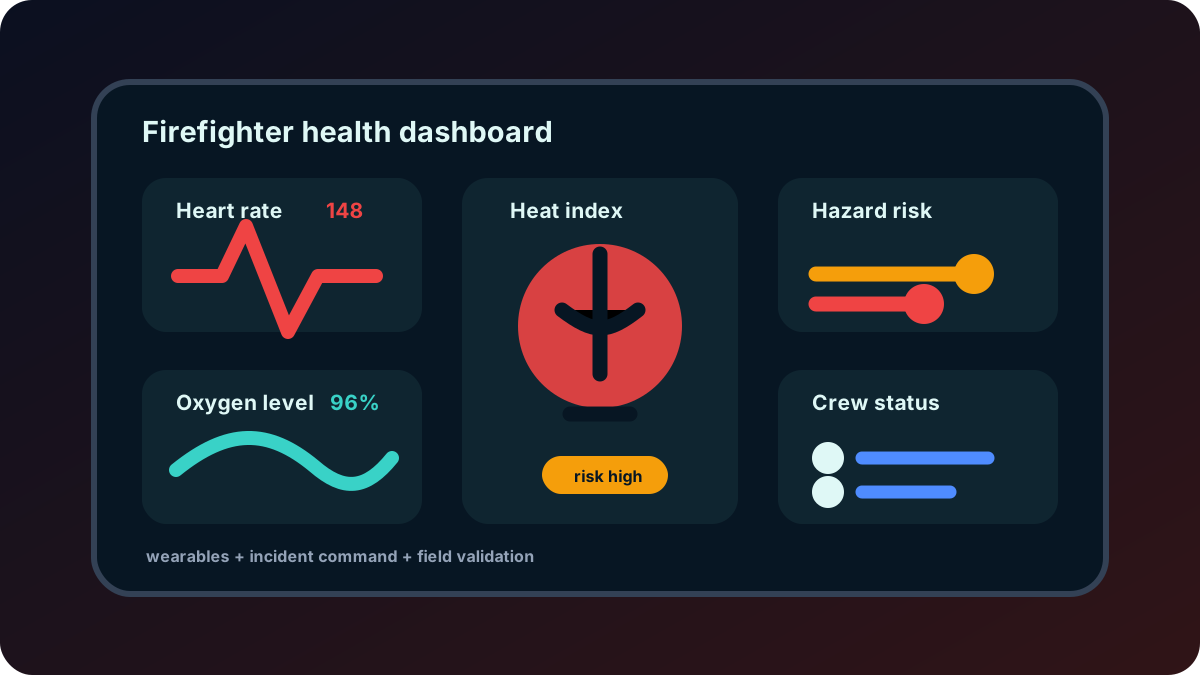
REaCH firefighter health dashboard visual
Zero to one IoT

REaCH firefighter health dashboard

Wearable sensor dashboard tested in 22 fire stations.

Open story
Align
Stakeholder alignment

REaCH MVP conflict resolution

Balancing speed with scalable product quality.

Open story
AI
AI / automation

Underwriting assistant prototype

LLM workflow for broker chat and quote updates.

Open story
Launch
AI-enabled delivery

Portfolio launch automation

AI-assisted portfolio launch, bilingual UX, fit agent, and rapid iteration.

Open artifact
Agent
AI automation / webcoding

Pipeline Recovery Agent

AI-assisted intake prototype for five local-service lead workflows.

Open story
LeadFlow
Side hustle / GTM

LeadFlow Studio website business

Preview-first website service with lead capture, reports, and Notion-backed follow-up.

Open story
Travel insurance | B2B2C white-label | Self-service sales funnel

Challenge

Costco Travel Insurance was a major sales channel, but a large share of transactions still depended on an in-house call center. That model was expensive, limited to business hours, created wait-time friction, and made it hard to scale demand. Costco and Travelex needed a self-service digital experience that could preserve Costco's brand trust, privacy expectations, and compliance requirements while moving customers through quote, enrollment, and purchase without agent support.

Product approach

I started by mapping the existing call-center workflow, reviewing call drivers and customer friction, and interviewing Costco account managers and operations teams. From there, I translated the service-heavy process into a digital quote-to-purchase journey, defining the PRD, success metrics, sprint priorities, and UAT plan across Travelex, Costco, design, engineering, QA, compliance, and analytics.

DiscoveryMapped call-center steps, customer questions, agent handoffs, and quote-to-purchase friction.
Experience designCreated a self-service flow aligned to Costco's brand, privacy standards, and mobile behavior.
ExecutionRan PRD, sprint planning, Figma review, QA, compliance review, and joint UAT cycles.
MeasurementTracked sales growth, call-center load, conversion, customer issues, and partner feedback.

Execution complexity

The product had to simplify a regulated insurance workflow without hiding what was legally or operationally required. The team had to align Costco's partner expectations, data privacy, analytics, accessibility, quote logic, enrollment fields, payment behavior, and production-readiness testing while shipping fast enough to reduce call-center dependency.

Outcome

We launched the self-service white-label site in about six months, enabling Costco members to purchase travel insurance online 24/7. The site grew to $23M+ in annual sales, drove 150% growth, reduced call-center volume nearly in half, and became a model for future partner integrations.

Live experience

Public entry point for Costco member verification

The current public page starts with member verification before customers can access exclusive travel insurance options. In the portfolio story, this visual anchors the business problem: a required partner gate placed before the quote value is visible.

Open live Costco site
costco.covermore.com
Costco Membership Verification

Sign in to view exclusive travel insurance options for Costco members.

12-digit member ID
Last name
Yes No
Continue to insurance options
1Verify member

Confirm eligibility and partner access rules.

2Quote trip

Collect minimal trip details to show value quickly.

3Compare plans

Display benefit options with Costco-aligned messaging.

4Enroll travelers

Progressively collect required fields and validations.

5Purchase

Complete payment and hand off policy fulfillment.

Travel insurance | Partner compliance | Funnel optimization

Challenge

Costco required member verification before users could access the insurance experience. The launch requirement used Costco member ID and last name, but many users did not have their physical or digital card ready. That made verification a major early-funnel blocker before users could even see a quote or understand value.

Product approach

I treated verification as both a compliance requirement and a conversion problem. I evaluated smoother alternatives such as single sign-on, but that required Costco-side engineering and would have delayed the six-month launch. The MVP decision was to launch with the available verification API, instrument the funnel, and use real drop-off data to make the case for a better phase-two experience.

TradeoffLaunch on time with the required API instead of delaying for an ideal SSO flow.
AnalyticsInstrumented verification drop-off to quantify where customers were blocked.
IterationUsed conversion data and customer behavior to guide improvements after launch.
Future stateReimagining verification after users understand value, such as later in the quote path or with a code-based flow.

Outcome

The initial launch moved the business online and protected partner requirements, but the data made the conversion cost visible. We recovered about 10% conversion through iteration and created evidence for a stronger long-term verification strategy, including SSO or a redesigned verification step after users are more committed to the quote journey.

Platform migration | Drupal to Adobe | Direct and partner sites

Challenge

The broader platform challenge was migrating direct and partner travel insurance sites from Drupal to Adobe. The team could not simply copy the old pages. We needed to reimagine content, quote flow, product display, validation, compliance, analytics, and partner-specific configuration while keeping multiple brands and rules consistent.

Product approach

I helped turn a complex migration into a product modernization effort. A key decision was to avoid hard-coding business rules into the front end. Instead, product rules, eligibility, pricing behavior, field-level validation, and display logic needed to come from APIs and configuration so the backend could act as the single source of truth.

RequirementsDocumented partner customization, product rules, content needs, legal copy, and field-level validation.
API-first logicMoved rule ownership toward APIs and configuration instead of duplicating logic in page templates.
GovernanceBalanced business, legal, compliance, analytics, content, accessibility, and UX constraints.
DeliveryCoordinated product, engineering, QA, design, offshore teams, and stakeholders across time zones.

Execution complexity

Each site variation could affect eligibility, content display, quote behavior, validation, checkout fields, or downstream fulfillment. QA had to validate not just the page experience, but also the API responses, product configuration, business rules, compliance text, and partner-specific edge cases.

Outcome

The migration created a more scalable foundation for direct and partner sites by separating experience presentation from product-rule ownership. It improved the team's ability to launch and maintain partner experiences with clearer configuration, more consistent validation, and less front-end rule duplication.

Mobile commerce | Payment integration | Conversion

Challenge

Mobile traffic was high, but checkout completion lagged desktop. Analytics and customer feedback pointed to manual credit-card entry as a major source of friction, especially for returning users buying travel insurance on a phone.

Product approach

I led the cross-functional work with UX, IT, compliance, and payment-gateway teams to introduce Apple Pay as a one-tap payment option. The product work focused on PCI constraints, gateway behavior, Figma review, adoption metrics, load-time risk, QA, and rollout coordination across U.S., India, and China teams.

Customer painManual card entry made a regulated checkout feel slower than it needed to be.
Risk controlAligned payment, compliance, and technical requirements before implementation.
DeliveryManaged discovery, sprint planning, QA, and success metrics through launch.
ImpactLaunched in three months, lifting mobile conversion and creating a reusable mobile-payment pattern.
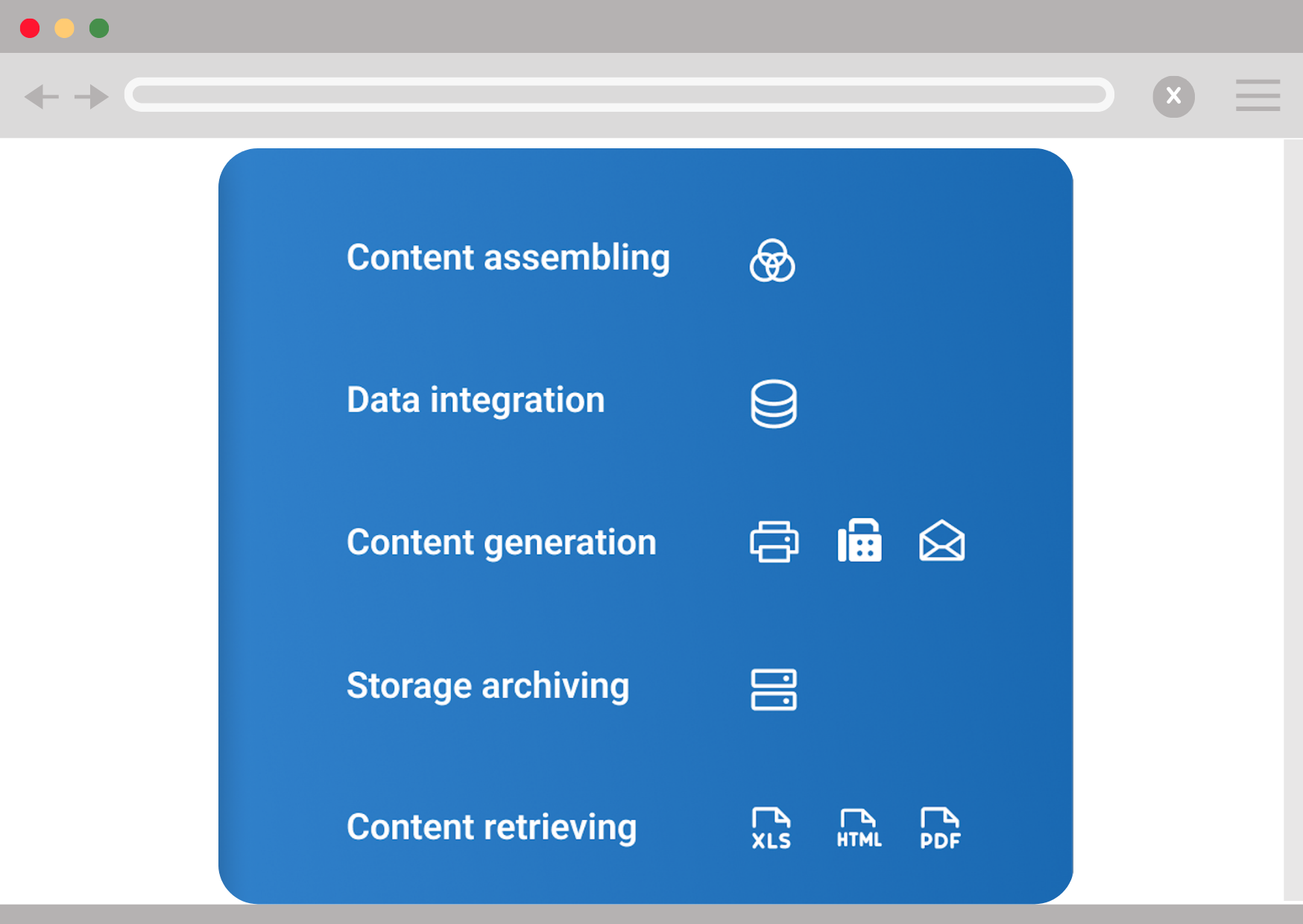
eCorr content generation workflow visual
Enterprise platform | Workflow automation

eCorr output management platform

At Mutual of Omaha, I worked on an internal web-based application used by 2,000-3,000+ employees to auto-generate customer policy documents. The system assembled policy content, integrated customer data, generated batch orders, and supported printing and mailing insurance documents across acquisition, underwriting, policy service, and claims workflows.

ProblemEnterprise document workflows were complex, manual, and used across many insurance product lines.
UsersInternal users across business units who needed accurate, compliant policy output at scale.
Product roleVoC interviews, roadmap ownership, user story prioritization, UX alignment, and cross-functional delivery.
ImpactImproved efficiency by 10%, reduced cost by 5%, and supported enterprise value streams touching millions of policyholders.
5% cost reduction 10% efficiency improvement 50+ team adoption 11 VoC interviews
Enterprise output management | Cost reduction | Data-driven prioritization

Challenge

Operational cost reduction was a team OKR, but insurance documents could not be optimized only for print cost. Some pages needed to remain single-sided for readability, legal, marketing, or customer-comprehension reasons, and policyholders could miss critical information if the wrong documents changed format.

Product approach

I analyzed the end-to-end document flow from content assembly and data integration through print and mailing. Using document volume and usage data, I grouped documents by reach and customer impact, then worked with business units, compliance, marketing, engineering, and product teams to decide which documents were safe candidates for double-sided printing.

DataUsed SQL and distribution patterns to identify major cost drivers.
PrioritizationStarted with high-reach, low-risk documents before expanding scope.
Customer lensProtected documents where back-of-page content could reduce clarity.
ImpactBeat the 3% OKR target by reaching 5% cost reduction within two quarters.
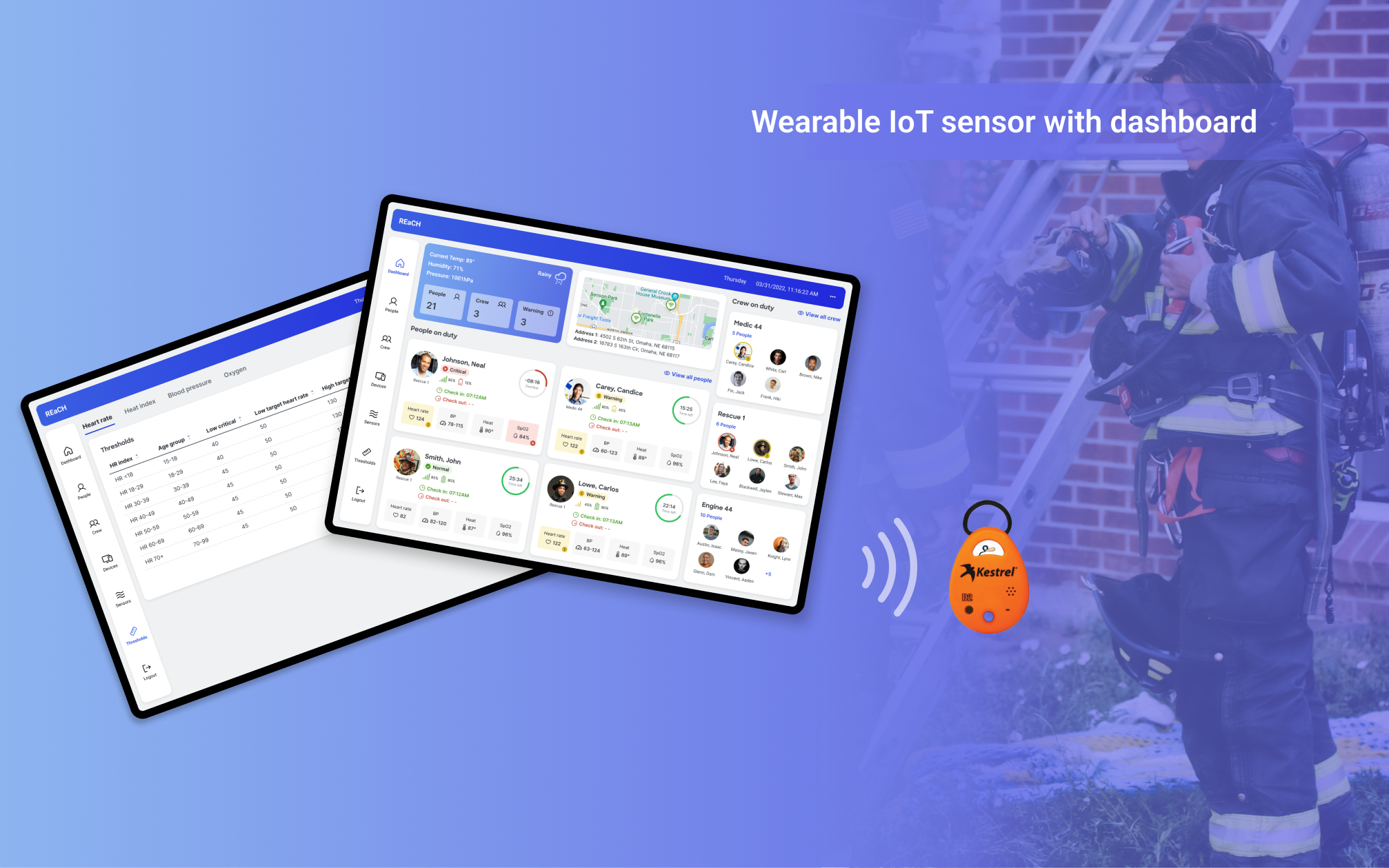
REaCH wearable IoT dashboard
Zero-to-one | IoT | Public safety

REaCH firefighter health dashboard

I led an 11-person team from concept to MVP for a wearable IoT dashboard that monitored firefighter health and environmental risk during live incidents. The product combined medical and environmental wearable sensors with a dashboard and alerting layer so incident commanders could see health risk signals such as heart rate, heat, oxygen, and temperature in real time.

ProblemFirefighters faced high health risk during incidents, but teams relied heavily on verbal radio communication rather than real-time safety metrics.
DiscoveryConducted 50+ VoC interviews, surveys, observations, and field research to understand personas and incident workflows.
MVPPrioritized wearable sensor data, dashboard visibility, and alerts for incident-command decisions.
ValidationTested in 22 Omaha fire stations, secured $1.5M in funding, and achieved a 4.6/5 satisfaction signal from field testing.
$1.5M funding 22 fire stations 50+ research touchpoints 4.6/5 field satisfaction
Zero-to-one delivery | Stakeholder alignment | MVP quality

Challenge

In the early REaCH build, stakeholders needed visible progress and fast demos, while the product also needed a durable dashboard foundation for future sensor data, alert patterns, and incident-command workflows. The technical discussion centered on whether to build quickly first or invest earlier in reusable structure.

Product approach

I first sought to understand the tech lead's concern: speed mattered because early demos kept stakeholders engaged. Then I built credibility by learning the front-end tradeoffs and proposed a practical middle path: preserve fast iteration while using reusable global styles and material-design components where they would accelerate later sprints.

Stakeholder needEarly demos were necessary to maintain momentum and funding confidence.
Technical tradeoffReusable dashboard patterns mattered because incident-command screens would grow over time.
ResolutionAligned around fast iteration inside a more structured component approach.
LearningInfluence improved when the product argument connected empathy, evidence, and delivery risk.
AI prototype | Underwriting workflow | LLM and rules

Challenge

Underwriters often had to interpret long broker emails, chat history, and notes before deciding what quote change or policy action was needed. The work was slow, text-heavy, and dependent on human review, but it still required transparency and control because insurance decisions carry compliance and fairness risk.

Product approach

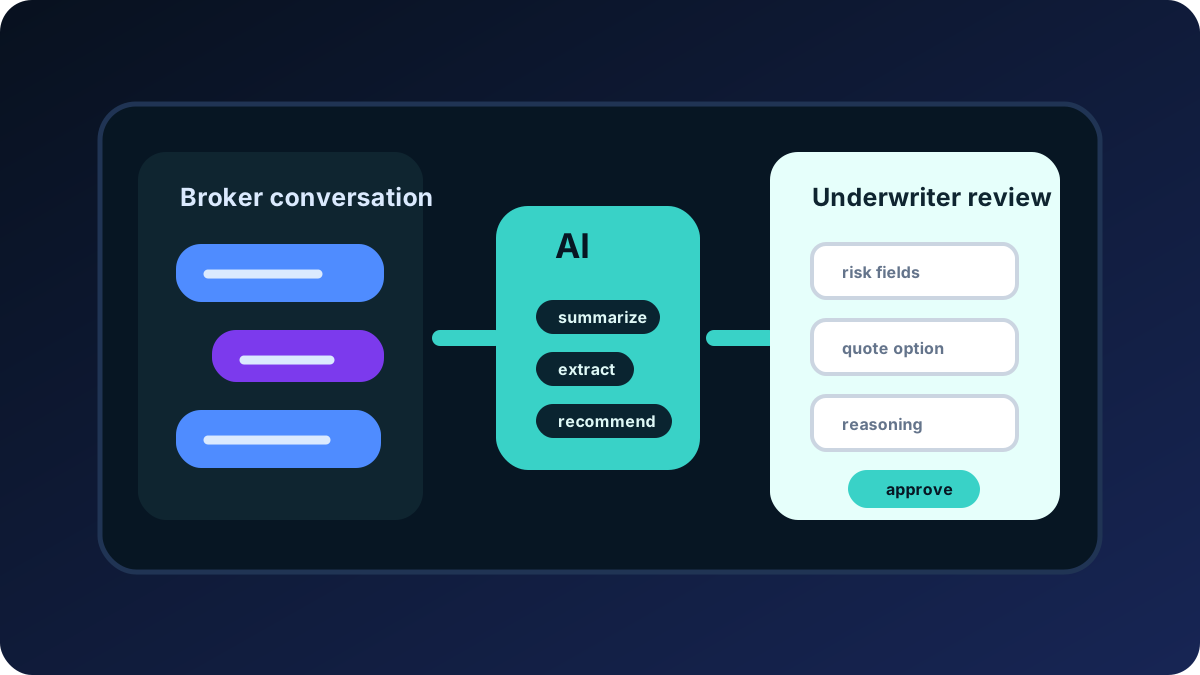
During Zurich's internal AI hackathon, I helped design a prototype workflow using LLMs and rules to ingest broker conversations, summarize intent, extract key business details, and recommend underwriting quote updates. I treated the AI as a co-pilot, not an autonomous decision-maker. The product flow kept output editable, source-aware, and reviewable so the underwriter stayed in control.

InputBroker chat, email thread, underwriting notes
ExtractIntent, missing fields, risk signals, policy action
RecommendQuote update, next best action, escalation path
ReviewEditable human approval before system update
AI roleAct as a co-pilot for summarization and recommendation, not an autonomous decision-maker.
WorkflowMove from ingestion to summary, extracted fields, quote update, and human review.
TrustMake AI output transparent, editable, and tied back to source context.
EvaluationEvaluate key-field accuracy, completeness, hallucination risk, review time, and underwriter acceptance.

Product learning

The most important product decision was not just whether the model could summarize text. It was where to put user control, how to expose confidence and source context, and how to measure whether the assistant actually reduced underwriting effort without increasing decision risk.

AI automation | Webcoding prototype | Local-service lead recovery

Challenge

Local-service businesses lose urgent leads when owners are in the field, calls arrive after hours, or customers submit vague requests and move to another provider. The product question was how to capture enough context quickly, classify urgency, and hand the owner a clear next action without forcing customers through a long form.

Product approach

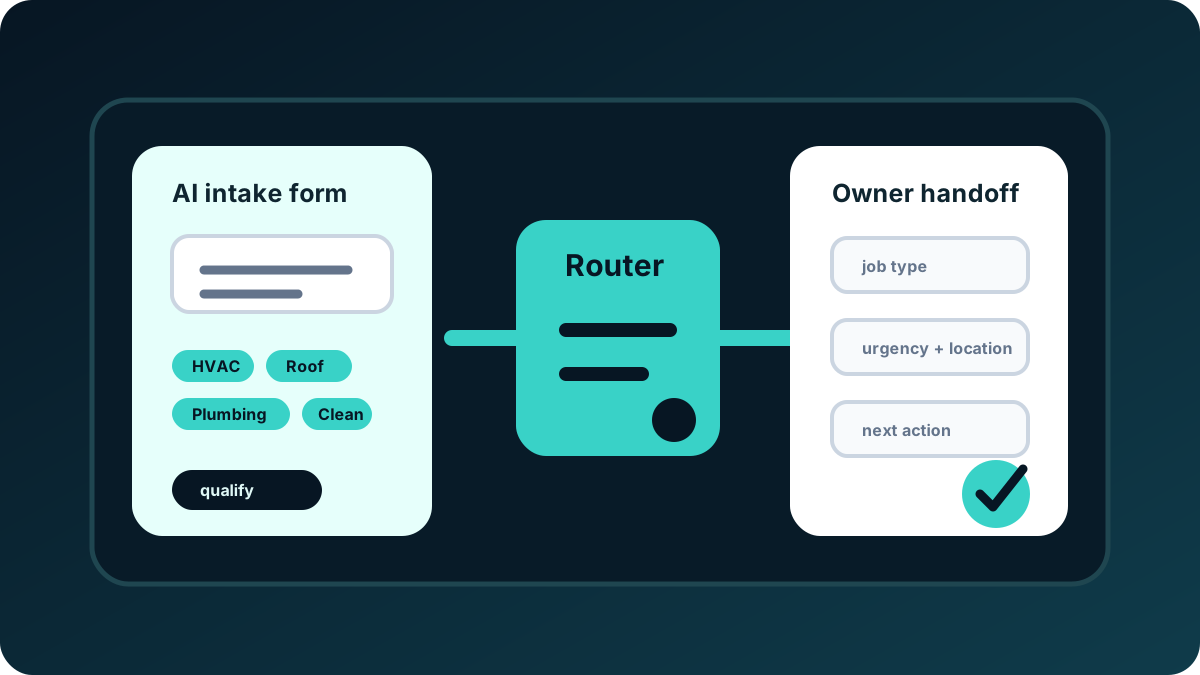
I framed one reusable workflow pattern: capture the request, classify the service type and urgency, collect location and timing, then produce an owner-ready handoff. The prototype applies that pattern across plumbing, HVAC, roofing, lawn care, and cleaning, with each route using service-specific copy, urgency signals, and handoff details while sharing the same interaction model.

Customer problemTurn incomplete requests into enough structured information for fast follow-up.
Reusable systemUse route configuration so one renderer can support multiple service businesses.
AI workflowClassify intent, summarize the job, suggest the response, and keep the owner in control.
Demo qualityMake the concept inspectable through a responsive public prototype, not a static slide.

Execution complexity

The important design constraint was making the prototype feel specific without rebuilding the product five times. Each workflow needed different language, urgency logic, and service details, while the underlying system needed to stay simple enough to iterate quickly with AI-assisted webcoding.

Outcome

The result is a live Cloudflare prototype that demonstrates fast product framing, reusable workflow design, AI-assisted build execution, and a practical local-business automation use case. It is intentionally positioned as a prototype, not a production revenue claim.

Live prototype

Five workflows from one intake system

The public demo shows plumbing, HVAC, roofing, lawn care, and cleaning routes using the same product pattern with different business rules and customer language.

Open Pipeline Recovery Agent
pipeline-recovery-agent.pages.dev
Lead recovery workflow
Capture Classify Locate Schedule Update
Owner handoff

Urgency, service type, location, preferred time, suggested reply, and next action.

Side hustle | Webcoding business | Lead capture service

Problem

Many small service businesses know they need a website, but the existing options feel risky: agencies are expensive, DIY builders take time, and many finished websites still do not clearly capture calls, quote requests, or follow-up context. The product question was how to create a lower-risk offer that helps a business see value before committing money.

Personal insight

This came from observing a repeated gap in local-service businesses: owners are good at the service work, but not always at digital lead capture, follow-up process, measurement, or website operations. I wanted to test whether a productized website service could combine practical PM discovery, webcoding speed, and simple automation into an affordable offer.

Research planInterview owners with no site, weak site, or manual follow-up; inspect current websites; collect common service-request fields and conversion blockers.
Survey signalsValidate willingness to pay, preferred monthly price, desired setup cost, comfort with preview-first engagement, and what owners want reported monthly.
Pain pointsHigh upfront agency cost, unclear ROI, missing quote forms, no lead table, slow updates, and no simple view of calls, forms, visits, or follow-up.
NeedsLaunch fast, look credible, capture requests, notify the owner, keep leads organized, and provide simple performance summaries.

Solution

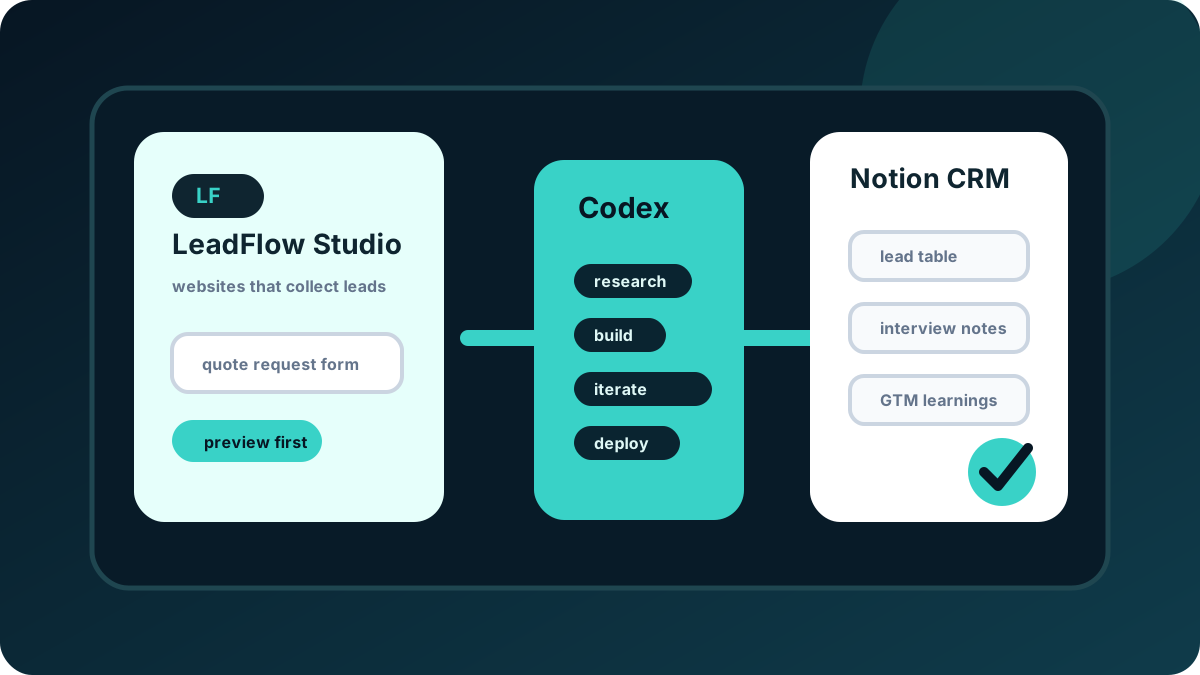
LeadFlow Studio packages the work as a preview-first service: build a clean website direction first, let the owner inspect the value, then launch only if the offer makes sense. The MVP offer includes a practical website, lead form, alert workflow, simple reporting, and an optional Notion-backed lead database or lightweight CRM.

1Review

15-minute website and lead-flow audit.

2Research

Collect services, customer questions, photos, reviews, and required lead fields.

3Preview

Build a no-risk first version with Codex-assisted webcoding.

4Capture

Route quote requests into email alerts and a Notion lead table.

5Measure

Report visits, calls, forms, and follow-up opportunities.

Challenge

The hard part is not only building websites quickly. It is turning a broad service into a repeatable product without losing customization. The offer needs standard packages, clear scope, simple pricing, fast asset collection, low maintenance burden, and enough reporting to prove value without becoming a heavy agency operation.

GTM plan

The 0-to-1 motion is narrow: target local-service businesses where lead capture is obvious and the purchase decision is simple, such as contractors, cleaners, lawn care, HVAC, roofing, and small professional services. The first wedge is a free website review and preview-first build. The 1-to-scale plan is to turn repeated needs into templates, route-specific intake forms, Notion database schemas, monthly report templates, and vertical packages.

Live side-business MVP

Website service with a measurable lead workflow

The current live page explains the offer: stop overpaying for websites that do not bring leads, launch a clean site, capture customer requests, and use simple reports to understand what is working.

Open LeadFlow Studio
leadflow-studio.pages.dev
LeadFlow Studio
Website Lead form Notion CRM Monthly report
0-to-1 MVP

Research the service need, launch a preview, capture requests, learn from owners, and turn repeat patterns into packages.

From 0 to 1, then 1 to scale

From 0 to 1, the goal is validation: confirm pain points, close the first pilots, measure whether owners understand the preview-first model, and learn which service categories repeat. From 1 to scale, the goal is productization: reusable site templates, repeatable intake forms, Notion-backed backend workflows, automated monthly reporting, standard onboarding, and a clearer GTM channel for local-service niches.

Story

Before moving fully into product management, I led operational and digital adoption work at Panda Restaurant Group. I managed a multi-unit business, launched UberEATS adoption, improved KPI ranking from #187 to #7 out of 245 areas, and learned how product decisions show up in frontline execution.